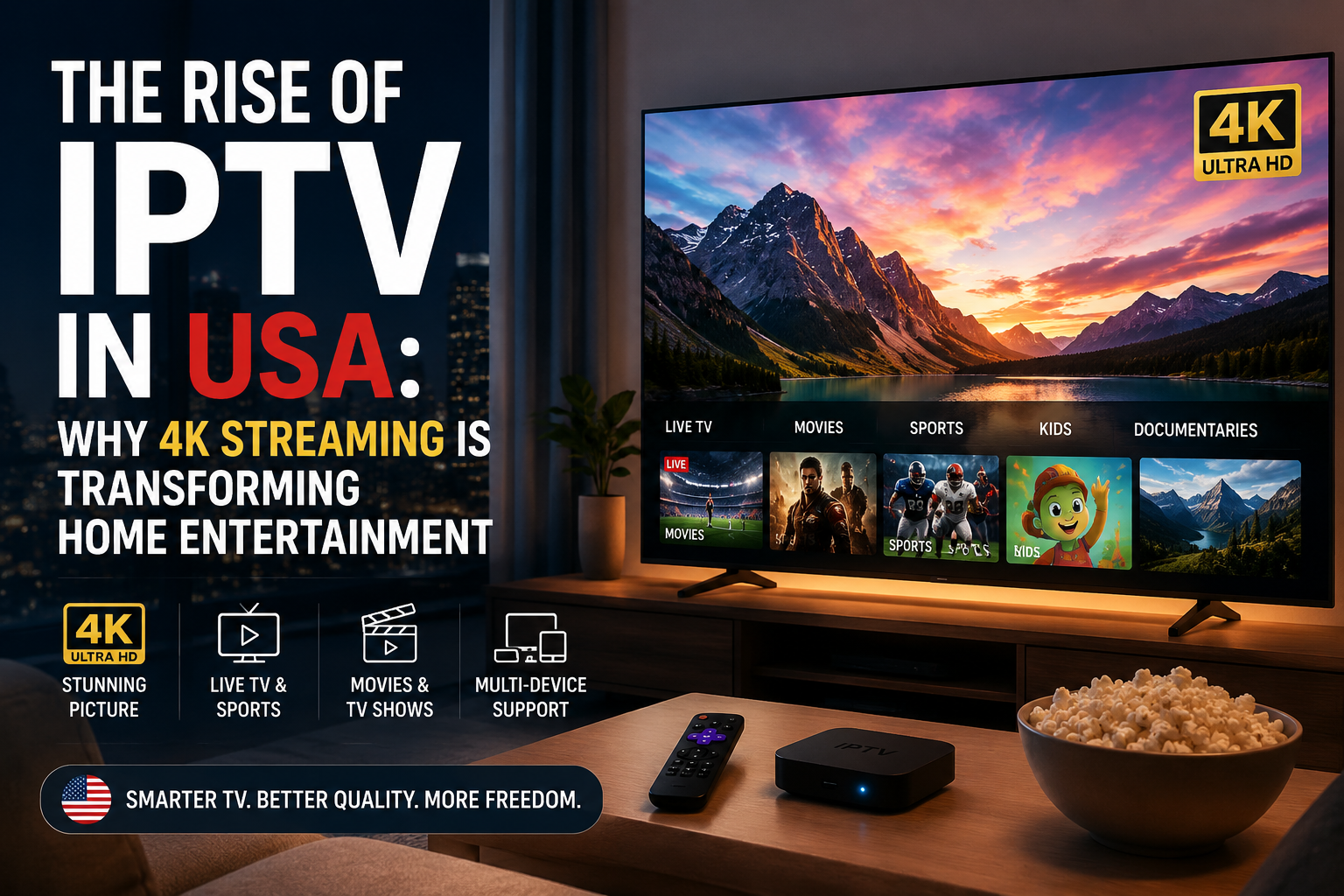
The Rise of IPTV in USA: Why 4K Streaming Is Transforming Home Entertainment
The rise of IPTV in USA households is changing how people watch live TV, sports, movies, and on-demand entertainment. Traditional cable is no longer the only option. More viewers now want flexible streaming, sharper picture quality, and access to content across Smart TVs, Android TV, Fire TV, smartphones, and tablets.
One of the biggest reasons behind this shift is 4K streaming. Viewers no longer want blurry channels, slow-loading apps, or limited programming. They want smooth playback, premium entertainment, international channels, and a modern home viewing experience that works on the devices they already use every day.
That is where IPTV is becoming a major part of modern home entertainment. In 2026, IPTV is not just an alternative to cable. For many households, it is becoming the main way to watch TV.
What Is IPTV?
IPTV stands for Internet Protocol Television. Instead of delivering television through satellite dishes, cable boxes, or antennas, IPTV uses an internet connection to stream live TV channels and video content.
This means viewers can watch entertainment through Smart TVs, Android TV boxes, Fire TV devices, smartphones, tablets, laptops, and IPTV player apps. The experience is more flexible than traditional cable because users are not tied to one box, one room, or one outdated channel guide.
A quality IPTV service can include live TV, sports channels, movies, TV shows, premium entertainment, international programming, and video-on-demand libraries. For viewers who want a modern streaming experience, Vision IPTV offers an example of how IPTV services are being built around convenience, 4K quality, and multi-device access.
Why IPTV Is Growing Fast in the USA
The rise of IPTV in USA households is not accidental. It is happening because viewer habits have changed. People want entertainment that fits their schedule, their devices, and their budget.
Traditional cable packages often come with long contracts, equipment fees, limited flexibility, and channels that many users never watch. IPTV gives viewers a more direct and customizable experience. Instead of depending on a cable technician or a fixed receiver, users can stream content through apps and connected devices.
Another major reason IPTV is growing is the demand for live sports and international content. Many American households want access to local channels, national networks, sports events, movie channels, and global entertainment in one place. IPTV can make that experience easier by combining different content categories into one streaming setup.
For families, IPTV also makes home entertainment more practical. One person can watch live sports in the living room, another can watch movies on a tablet, and someone else can stream a show on a Smart TV. This kind of flexibility is difficult to match with traditional cable.
Why 4K Streaming Matters
4K streaming is one of the biggest upgrades in home entertainment. Compared with standard HD, 4K offers a sharper and more detailed picture. This is especially noticeable on larger TVs, where image quality can make a major difference.
For sports fans, 4K streaming can make games feel more immersive. Details like the field, crowd, player movement, and camera angles appear clearer. For movie lovers, 4K adds depth, color, and detail that make home viewing feel closer to a theater experience. For families, it improves everyday viewing, from documentaries to TV shows and live channels.
The rise of larger Smart TVs has also made 4K more important. A 65-inch or 75-inch screen needs better resolution to look clean and sharp. Low-quality streams can appear pixelated on large displays, while 4K IPTV streams provide a more polished experience when the internet connection and device are strong enough.
This is one of the main reasons IPTV providers are focusing more on 4K channels, UHD content, and faster servers. Viewers expect high-quality streaming, and 4K is now a major part of that expectation.
IPTV and the Modern Living Room
Home entertainment used to revolve around cable boxes and scheduled programming. Today, the living room is built around internet-connected devices. Smart TVs, Android TV, Fire TV Stick, Apple TV, gaming consoles, soundbars, and high-speed Wi-Fi have changed how people consume content.
IPTV fits naturally into this environment. Instead of adding more hardware, users can often install an IPTV app, add their subscription details, and start watching. This makes IPTV especially attractive for viewers who want less clutter and more control.
The modern living room is also more personalized. Viewers want access to live channels, on-demand movies, sports, and international content from one interface. IPTV helps create that all-in-one entertainment experience.
For users with Android TV devices, proper setup is important. A clean installation can improve performance, reduce buffering, and make channel navigation easier. This guide on how to install IPTV on Android TV in the USA is a useful resource for viewers who want a smoother setup process.
Why Viewers Are Moving Away from Cable
Cable TV still exists, but its role is shrinking. Many viewers are frustrated by high monthly bills, limited package options, regional restrictions, and outdated equipment. IPTV gives users a more flexible way to watch content without depending on traditional cable infrastructure.
Another issue is convenience. Cable often requires a fixed receiver and a specific installation process. IPTV is easier to access across multiple devices. This matters because viewers no longer watch TV only in the living room. They watch in bedrooms, kitchens, offices, hotels, and while traveling.
Cost is also part of the shift. Many households are reviewing their monthly subscriptions and looking for better value. IPTV can be attractive because it often combines live TV, movies, shows, and sports into one service. For users who want variety, this can feel more efficient than paying separately for several streaming platforms.
However, users should always choose IPTV services carefully. The best experience comes from providers that focus on stability, support, picture quality, and clear setup instructions.
The Role of Internet Speed in 4K IPTV
A strong internet connection is essential for IPTV, especially for 4K streaming. Even the best IPTV service can perform poorly if the home network is weak.
For 4K IPTV, viewers should use a fast and stable internet connection. Wired Ethernet is usually better than Wi-Fi because it reduces signal drops and interference. If Wi-Fi is the only option, the router should be close to the streaming device, and the network should not be overloaded with too many connected devices.
Buffering is one of the most common IPTV complaints, but it is not always caused by the IPTV provider. Sometimes the problem comes from slow internet, weak Wi-Fi, outdated apps, low-quality devices, or background downloads.
To get the best 4K IPTV experience, users should keep their apps updated, restart their router regularly, use reliable streaming devices, and avoid running too many high-bandwidth activities at the same time.
According to the FCC Broadband Speed Guide, streaming Ultra HD 4K video typically requires around 25 Mbps per stream.
IPTV for Sports Fans
Sports are a major reason many viewers are switching to IPTV. Live sports remain one of the most valuable parts of home entertainment, especially in the USA. Football, basketball, baseball, hockey, boxing, MMA, soccer, and international sports all attract loyal audiences.
With 4K IPTV, sports viewing becomes more detailed and more immersive. Clearer picture quality helps viewers follow fast action, see player movement, and enjoy the atmosphere of live events. For large-screen TVs, this makes a major difference.
IPTV also gives sports fans more flexibility. Instead of being limited to one cable package, users can access entertainment across different devices and viewing spaces. A viewer can watch a game in the living room, continue on a tablet, or use a different device in another room.
This flexibility is one of the strongest reasons IPTV is becoming part of everyday entertainment in American homes.
IPTV for Movies and On-Demand Entertainment
IPTV is not only about live channels. Many users also choose IPTV because of video-on-demand content. Movies, shows, documentaries, and series can be part of the experience, depending on the service.
4K streaming improves this category significantly. Movies look better, action scenes appear sharper, and modern TVs can display more detail. For viewers who enjoy cinema-style entertainment at home, 4K IPTV can make the experience more satisfying.
The popularity of home theaters has also helped IPTV grow. More households now have large TVs, better speakers, soundbars, and improved internet connections. IPTV fits into this setup by giving users access to a wide range of content through one connected system.
Why Device Compatibility Is Important
One of the biggest advantages of IPTV is device flexibility. Viewers can use IPTV on Smart TVs, Android TV boxes, Fire TV Stick, smartphones, tablets, laptops, and other streaming devices.
This is important because every household has different habits. Some users want IPTV on a main living room TV. Others want it on multiple devices. Some prefer mobile access while traveling. A good IPTV setup should support the devices people already own.
Device quality also affects performance. A cheap or outdated streaming device may struggle with 4K playback, even if the IPTV service is strong. For the best results, users should choose devices with enough processing power, updated software, and strong network support.
Should IPTV Users Use a VPN?
Many IPTV users in the USA use VPNs for privacy, security, and network stability. A VPN can help protect browsing activity, reduce exposure on public Wi-Fi, and sometimes improve routing depending on the internet provider.
However, a VPN is not a magic fix for every IPTV problem. It will not turn a poor-quality service into a good one, and it may reduce speed if the VPN server is slow. For 4K streaming, speed matters, so users should choose a fast and reliable VPN if they decide to use one.
For viewers who want to understand this better, this guide on the best VPN for IPTV USA in 2026 explains what to look for when using a VPN with IPTV.
What to Look for in a 4K IPTV Service
Not every IPTV service offers the same quality. Before subscribing, users should look for several key features.
A good 4K IPTV service should offer stable servers, fast channel loading, HD and 4K options, simple setup instructions, customer support, and compatibility with popular devices. It should also provide a smooth user experience without constant freezing or broken links.
The best IPTV experience is not only about the number of channels. Quality matters more than quantity. A provider may advertise thousands of channels, but if the streams buffer constantly, the experience will be frustrating. Viewers should focus on reliability, picture quality, support, and ease of use.
The Future of IPTV in the USA
The future of IPTV in the USA looks strong because it matches how people already consume entertainment. Viewers want more control, better quality, and fewer restrictions. IPTV provides a flexible way to watch live TV, sports, movies, and on-demand content through internet-connected devices.
As internet speeds improve and more households upgrade to 4K TVs, demand for high-quality IPTV will continue to grow. The next stage of home entertainment will likely focus on faster streaming, better apps, improved channel guides, stronger device support, and more reliable 4K performance.
IPTV is also becoming more familiar to everyday users. What once felt technical is now much easier to set up. With the right device, app, and subscription, users can create a complete home entertainment system without traditional cable.
Final Thoughts
The rise of IPTV in USA homes shows how quickly entertainment habits are changing. Viewers want flexible access, sharp picture quality, live channels, sports, movies, and on-demand content without the limitations of old cable systems.
4K streaming is a major reason IPTV is transforming home entertainment. It gives users better picture quality, a more immersive viewing experience, and a setup that works well with modern Smart TVs and streaming devices.
For American households in 2026, IPTV is no longer just a backup option. It is becoming a central part of the modern entertainment experience. With the right service, strong internet connection, and proper device setup, IPTV can deliver a cleaner, sharper, and more flexible way to watch TV at home.