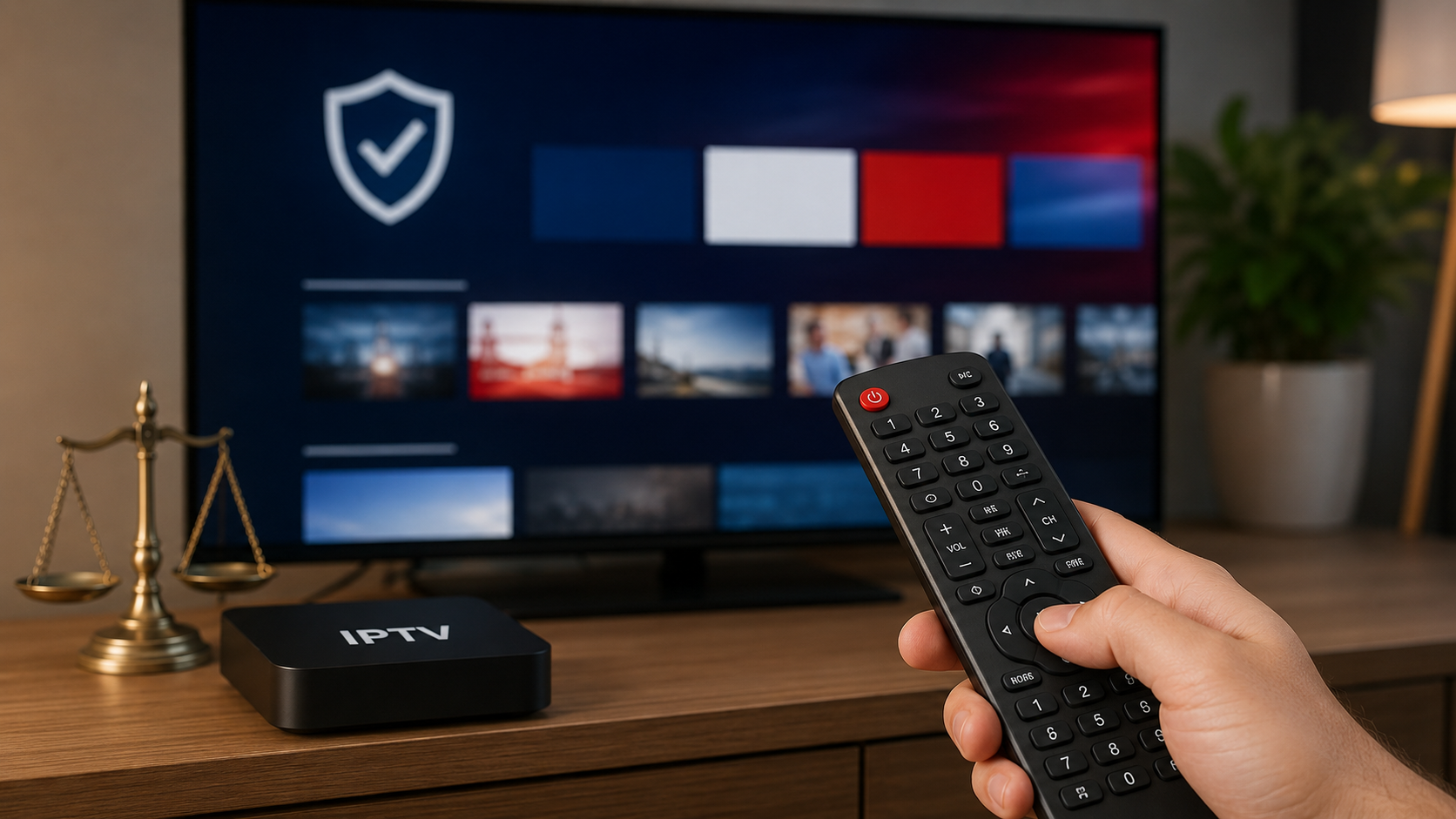
Is IPTV Legal in the USA? Everything You Need to Know
Is IPTV Legal in the USA? IPTV has changed how Americans watch television. Instead of relying on cable boxes or satellite dishes, viewers can stream live channels, sports, movies, and on-demand programs through an internet connection. IPTV can work on Smart TVs, Fire TV Stick, Android TV, Apple TV, smartphones, tablets, and computers.
However, the rapid growth of internet television has created an important question: Is IPTV legal in the USA?
The short answer is yes—IPTV technology is legal in the United States. What determines legality is whether the provider has permission to distribute the channels, movies, sports, and other programs included in its service. A properly licensed IPTV platform operates legally, while a provider that retransmits copyrighted content without authorization may violate federal copyright law.
This guide explains how IPTV works, what separates legal IPTV from unauthorized streaming, what risks viewers should understand, and how to evaluate a service before subscribing.
This article provides general information and should not be considered legal advice. Laws and individual circumstances can vary.
What Is IPTV?
IPTV stands for Internet Protocol Television. It is a technology that delivers television programming through an internet connection rather than through traditional terrestrial, cable, or satellite signals.
IPTV services can provide several types of content:
- Live television channels
- Movies and series on demand
- Live sporting events
- Catch-up television
- Recorded programs
- Electronic Program Guides
- International programming
- Local and national channels
IPTV itself is simply a delivery method. The technology does not determine whether a service is legal or illegal.
This is similar to how a web browser, media player, or streaming device can be used for many purposes. The software remains legal, but the content accessed through it must be distributed with the necessary authorization.
People comparing internet television with traditional service can learn more about their practical differences in our guide to IPTV vs cable TV in the USA.
Is IPTV Legal in the USA?
Yes, IPTV is legal in the USA when the service provider has obtained the necessary rights or licenses to distribute its programming.
Legal IPTV services enter agreements with television networks, studios, sports organizations, broadcasters, or other rights holders. These agreements establish which programs the provider can distribute, where they may be shown, and how long they can remain available.
A legal provider may offer:
- Properly licensed live channels
- Authorized on-demand movies and series
- Free, ad-supported programming
- Public-domain content
- Content produced or owned by the provider
- Channels made available through legitimate distribution agreements
The same basic principle applies to cable, satellite, and online streaming platforms. A company must have permission to distribute protected programming to its subscribers.
Therefore, the correct question is not simply, “Is IPTV legal?” A better question is, “Does this particular IPTV provider have permission to distribute the content it offers?”
When Can an IPTV Service Be Illegal?
An IPTV service may be operating illegally when it distributes copyrighted television channels, films, sporting events, or other programs without authorization from the rights holders.
Unauthorized services may capture broadcasts from legitimate sources and retransmit them to paying subscribers. Others may copy movies and television programs from different platforms before adding them to an unlicensed video-on-demand library.
Potential violations can include:
- Retransmitting premium television channels without permission
- Restreaming pay-per-view events without authorization
- Distributing copyrighted movies or television series illegally
- Bypassing access controls used by legitimate platforms
- Reselling accounts or streams without authorization
- Sharing protected content outside its licensed territory
- Operating a commercial streaming service built primarily around pirated content
The number of channels offered does not determine legality. A small service can distribute content without authorization, while a large platform can operate legally through appropriate licensing agreements.
Likewise, paying for an IPTV subscription does not automatically make it legal. A provider can charge customers while still distributing content without permission.
What Does US Law Say About Illegal Streaming?
Copyright owners generally control how their protected programs are reproduced, distributed, displayed, and publicly performed. An IPTV operator normally needs authorization before transmitting protected television programs, films, or sporting events to subscribers.
The United States strengthened its response to commercial streaming piracy through the Protecting Lawful Streaming Act. In a documented enforcement case, the U.S. Department of Justice explained how the law applies to illegal commercial streaming services. The law primarily targets people who knowingly operate and profit from services that distribute copyrighted material without authorization. Depending on the circumstances, operators can face imprisonment, substantial fines, restitution, and other penalties.
Copyright owners may also pursue civil litigation. Possible remedies can include monetary damages, injunctions, domain seizures, and orders requiring a service to stop distributing protected content.
The law primarily targets those operating or supplying illicit streaming services. It should not be interpreted as a blanket statement that every viewer automatically commits the same criminal offense simply by opening a stream.
Is It Illegal to Watch Unauthorized IPTV?
This question requires a more careful answer.
Federal enforcement actions frequently focus on the people who create, operate, market, and profit from unauthorized streaming services. These operators are responsible for acquiring and redistributing protected content on a commercial scale.
That does not mean viewers should assume there are no legal concerns. A user’s exposure can depend on what the person knows and does. Downloading copyrighted files, retransmitting channels, reselling subscriptions, sharing protected streams, bypassing access controls, or helping operate an unauthorized service can create additional legal risks.
A customer may also lose access without warning when an illegal service is shut down. Subscriptions, saved settings, payments, and support channels can disappear immediately.
If you are uncertain about a provider’s licensing status, ask the company for clear information or consult a qualified attorney. Avoid relying solely on claims made in advertisements, online forums, or social media groups.
How Can You Tell Whether an IPTV Provider Is Legal?
There is no single test that proves whether every IPTV service is legal. However, several indicators can help consumers make a more informed decision.
Clear business information
A trustworthy provider should clearly explain who operates the service and how customers can contact support. Look for accessible terms, privacy information, refund conditions, and service policies.
A website with no identifiable business information does not automatically prove illegality, but the lack of transparency should encourage additional caution.
Information about content rights
Legal providers should be able to explain the basis on which they distribute their programming. Some licensing agreements may contain confidential commercial details, but a legitimate company should not avoid every question about authorization.
Be cautious if a provider responds to licensing questions with vague claims that IPTV is always legal simply because the content is delivered over the internet.
Realistic and consistent offers
Price alone cannot prove that a provider is illegal. Nevertheless, an extremely low price combined with an enormous collection of premium channels, newly released movies, exclusive sporting events, and pay-per-view programming deserves closer examination.
Content licensing is expensive. An offer that appears economically impossible should not be accepted without further verification.
Secure payment and customer policies
Look for understandable billing terms, a documented refund process, secure checkout, and reliable customer support. A particular payment method is not proof of legality or illegality, but a provider that hides its identity and offers no payment protection creates greater risk.
Accurate marketing
Responsible services explain their features without guaranteeing impossible results. Claims such as “every channel in the world,” “completely untraceable,” or “all premium content permanently available” should be treated cautiously.
Availability can change because of licensing territories, technical limitations, programming agreements, and regional restrictions.
Are IPTV Players and Apps Legal?
Yes. IPTV players are generally legal software tools. An IPTV player does not necessarily provide television channels itself; it may simply organize and play content supplied through a playlist or provider login.
Common login methods include:
- M3U playlist URLs
- Xtream Codes credentials
- Portal addresses
- Provider usernames and passwords
These technologies have legitimate uses. An M3U playlist, for example, is only a file format. Its legality depends on the streams it contains and whether those streams are authorized.
Installing an IPTV application on a Smart TV, Android TV device, or streaming box is not inherently illegal. The same application can be used to access licensed programming, personal media, free channels, or unauthorized content.
If you use a television powered by Android or Google TV, our guide explains how to install IPTV on Android TV and configure a compatible player. Installation should always be performed with legitimate software and an authorized content source.
Is Sideloading an IPTV App Illegal?
Sideloading means installing an application from outside the device’s official app store. The process itself is generally not illegal in the United States.
Some legitimate applications are sideloaded because they are unavailable in a particular app store, intended for testing, or distributed directly by their developers. However, sideloading carries greater security risks because the application may not have undergone the store’s normal review process.
Before installing a sideloaded IPTV app:
- Confirm the identity of its developer
- Obtain it from a trusted source
- Check the requested permissions
- Keep your device updated
- Scan installation files where possible
- Avoid modified or “cracked” applications
- Do not enter sensitive information into an unverified app
The source of the content remains the central legal question, regardless of how the player was installed.
Does Using a VPN Make IPTV Legal?
No. A VPN does not turn an unauthorized IPTV service into a legal one.
A Virtual Private Network encrypts internet traffic and routes the connection through a VPN server. People may use VPNs for privacy, public Wi-Fi protection, remote work, travel, or general online security.
VPN technology is generally legal in the United States. However, users must still obey copyright law, service agreements, and other applicable rules. Hiding an IP address does not create permission to access or distribute protected programming.
A VPN can improve privacy, but it cannot verify a provider’s licenses or guarantee that a streaming source is lawful. Our guide to choosing a VPN for IPTV in the USA explains the privacy, speed, and device factors users should consider.
Are Free IPTV Services Legal?
A free IPTV service can be legal. Many authorized platforms offer free television supported by advertising. Public broadcasters, independent creators, government organizations, and rights holders may also distribute free streams.
Free content may include:
- Ad-supported channels
- Public-domain movies
- Local news broadcasts
- Creator-owned programming
- Promotional channels
- Public and educational content
However, a free stream is not automatically authorized. A website that offers premium sporting events, subscription channels, or newly released films at no cost may be redistributing protected content without permission.
Always evaluate the source and authorization rather than assuming that “free” means legal or illegal.
What Are the Risks of Using an Illegal IPTV Service?
Legal exposure is not the only concern. Unauthorized IPTV platforms may create significant practical and security risks.
Malware and unsafe applications
Unofficial applications can contain malicious software that collects passwords, payment details, browsing information, or personal files. Streaming boxes purchased from unknown sellers may also arrive with unsafe software already installed.
Stolen financial information
A provider that operates anonymously may not protect customer data. Credit card information and personal details can be exposed, sold, or used for fraudulent transactions.
Sudden service shutdowns
Unauthorized IPTV services can disappear without warning because of enforcement actions, hosting problems, payment disputes, or disagreements among operators. Customers may lose the remaining value of their subscriptions.
Poor reliability
Unlicensed streams may buffer, freeze, change addresses, or stop working during popular live events. Because the provider does not control the original programming, it may be unable to guarantee stable access.
No meaningful consumer protection
Anonymous operators may ignore refunds, support requests, privacy commitments, and service guarantees. Recovering money from an unidentified or overseas seller can be extremely difficult.
How to Choose IPTV Responsibly in the USA
Before purchasing a subscription, take time to investigate the provider rather than focusing only on price and channel quantity.
Use this checklist:
- Identify the company operating the service.
- Read its terms, privacy policy, and refund conditions.
- Ask how it obtains authorization to distribute programming.
- Confirm that its marketing claims are consistent and realistic.
- Verify that support can answer specific questions.
- Use secure payment methods with appropriate customer protection.
- Download applications only from trusted sources.
- Avoid reselling or sharing access without permission.
- Protect your account with a strong, unique password.
- Stop using a service if you discover that its content is unauthorized.
A free trial can demonstrate stream quality, device compatibility, and customer support, but it cannot prove that the provider owns the necessary content rights. Licensing must be evaluated separately.
Frequently Asked Questions
Is IPTV itself illegal in the USA?
No. IPTV is a legal method of transmitting television over the internet. Legality depends on whether the provider has permission to distribute its content.
Can I legally watch live sports through IPTV?
Yes, when the IPTV provider has obtained the necessary rights to show the sporting event in your location. Restreaming protected sports broadcasts without authorization may violate copyright law.
Are IPTV boxes illegal?
No. Android boxes, Fire TV devices, Smart TVs, and dedicated IPTV boxes are legal hardware. Problems arise when a device is configured or marketed primarily to access unauthorized content.
Is an IPTV subscription legal because I paid for it?
Not necessarily. Paying a seller does not prove that the seller has obtained distribution rights. Consumers should investigate the source, policies, and licensing claims.
Can a VPN protect me from copyright law?
No. A VPN can improve connection privacy, but it does not provide legal permission to access copyrighted content.
Is IPTV Smarters Pro illegal?
An IPTV player is generally a software tool and does not determine the legality of the content. Users must connect it to an authorized playlist or service.
What should I do if I suspect my provider is unauthorized?
Stop using the service, remove any untrusted applications, change passwords that may have been exposed, monitor your payment accounts, and obtain advice from a qualified legal professional when necessary.
Final Verdict: Is IPTV Legal in the USA?
So, is IPTV legal in the USA? Yes—IPTV technology is completely legitimate when providers distribute content with proper authorization.
The line between legal and illegal IPTV is based primarily on content rights, not the application, device, playlist format, VPN, or delivery technology. Licensed services offer a flexible way to watch live television and on-demand entertainment, while unauthorized platforms can expose operators and customers to legal, financial, privacy, and cybersecurity risks.
Before subscribing, investigate the provider, read its policies, ask about licensing, and avoid offers that appear impossible to support legitimately. A careful decision helps you enjoy IPTV’s convenience without unnecessary risk.